

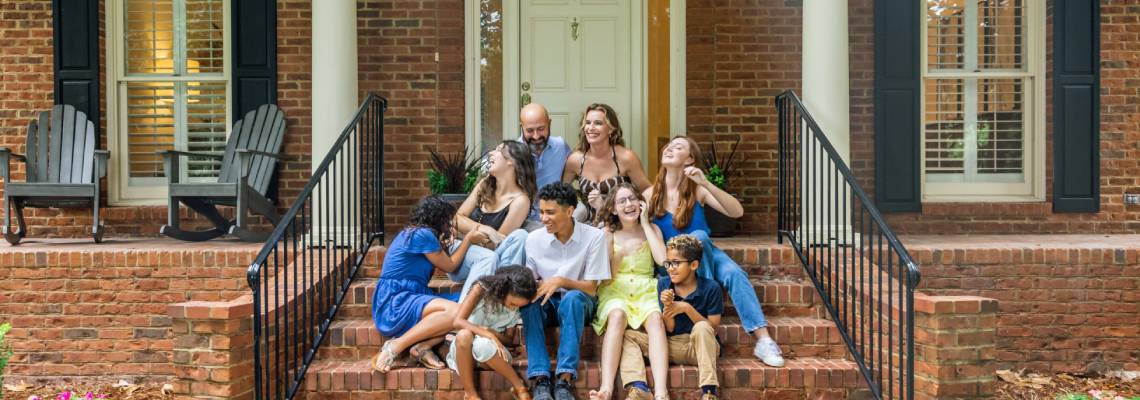
Protecting Non-Biological Children in Blended Families Without Proper Adoption or Trust Language
If you have helped raise your spouse’s child, you may expect that child to share in what you leave behind. Under Kansas and Missouri law, that often does not happen on its own.
Unless you legally adopted the child or named them clearly in a will, trust, or beneficiary designation, state inheritance rules generally leave a stepchild out. That can be a difficult thing to learn when the relationship has existed for years and feels no different from any other parent-child bond.
Adoption is not the only way to protect a child you consider your own. At Heartland Estate Law, LLC, we help blended families in Overland Park and throughout Kansas and Missouri put that intention into writing. With carefully worded wills, trusts, and beneficiary forms, you can direct property to a stepchild by name, decide how and when they receive it, and reduce the risk of a dispute with other relatives.
If you created your plan before your family took its current shape, call us to schedule a free consultation.
Why Stepchildren Often Inherit Nothing Without a Plan
Both states define who counts as a child for inheritance, and stepchildren are not on either list. In Kansas, K.S.A. 59-501 covers biological children, legally adopted children, and children whose parentage was established under the Kansas Parentage Act. Missouri’s probate code at RSMo 472.010 similarly includes adopted children and children born outside of marriage.
These definitions control what happens when someone dies without a valid will, a situation called intestacy. State law then divides the estate among the surviving spouse and legal children. A stepchild you raised from preschool may receive nothing, while a biological child you rarely saw could take a full share.
Your spouse might inherit and later pass property to their own child. That outcome depends on your spouse surviving you, keeping the assets, and doing their own planning. Courts in both states have recognized narrow claims based on an unfinished promise to adopt, but these claims are hard to prove and are no substitute for a written plan.
How Vague Will or Trust Language Can Exclude a Stepchild
Having a will or trust does not automatically protect a non-biological child. Words such as “my children,” “my descendants,” or “my issue” may be interpreted according to applicable inheritance and estate document rules, which do not always include a stepchild. Common gaps include:
A will leaving everything to “my children” without naming each child.
A trust that defines beneficiaries as descendants or issue.
A plan signed before a remarriage or before the child joined the household.
An estate left entirely to a spouse, on the assumption that the spouse will provide for the stepchild later.
Finding one of these gaps can be unsettling, especially if you believed your paperwork was finished. In most cases, it can be corrected while you are living and able to sign updated documents.
Ways to Protect a Child You Did Not Adopt
Adoption gives a stepchild the same inheritance rights as a biological child, but it is not always possible or wanted. A biological parent may refuse consent, or an adult stepchild may want to keep that legal relationship intact. Other tools can carry out your wishes:
Name the child directly. A will or trust can identify the child by full name and define “children” to include them.
Use a revocable living trust. A trust can pass assets outside probate, keep terms private, and set ages or conditions for distributions.
Update beneficiary designations. Life insurance, retirement accounts, and payable-on-death accounts follow the beneficiary form, not your will.
Consider a transfer-on-death deed. Both Kansas and Missouri allow real estate to pass this way without probate.
Coordinate plans with your spouse. A trust that becomes irrevocable at the first death can keep a stepchild’s share from being changed or forgotten later.
When Should You Review an Existing Plan?
A blended family plan works best when you review it as the family changes. Marriage, divorce, a new baby, a child turning 18, or the death of a biological parent can each affect who should receive what and who should manage it.
Location matters too. Kansas and Missouri apply their own rules to wills, trusts, and nonprobate transfers, so property in both states or a move across the state line deserves a closer look. Through our non-traditional family estate planning services, we compare your documents and account forms against what you want to happen.
If you are unsure whether your stepchild is named anywhere, gather your will, trust, deeds, and recent account statements. Seeing them side by side often reveals gaps that are simple to fix now and much harder to resolve in probate later.
Plan for Every Child with Our Kansas Estate Planning Attorneys
Under Kansas and Missouri intestacy laws, a stepchild generally will not inherit from a stepparent solely because of their relationship. Adoption or an express estate planning provision can help ensure that the child receives the intended inheritance.
At Heartland Estate Law, LLC, we help blended and non-traditional families throughout Kansas and Missouri create estate plans that reflect their unique circumstances and wishes. From our Overland Park office, we draw on the experience of our attorneys, including Thomas H. Sullivan, a member of the Kansas Bar Association’s Probate and Estate Planning Section. We can review your existing documents, recommend appropriate changes, and develop a plan tailored to your family’s needs. Contact us today to schedule a free consultation.